Industry
Part of Document Preservation Comparison: Household Storage Risks
Document preservation: borrowing fire planning from professional archive models
Fire and emergency planning translated to a house: the three-element model behind fire risk, and the hazard survey that turns worry into a short list of fixes.
What to take away
- Fire is the one risk where the loss can be total. Everything else damages; fire removes.
- The hazard survey is the transferable part: probability, frequency, likely damage, severity, and what you will accept.
- Small unchecked factors combine. Most disasters were preventable in the ordinary sense of the word.
- No practitioners were interviewed for this page. It works from published emergency planning guidance.
What the CCI guidance means for a house
The Canadian Conservation Institute wrote its guidance for museums and galleries, but the survey questions need no collection. A house has the same risks in miniature: water above paper, heat near fuel, a box on the floor.
The National Fire Protection Association's NFPA 909 sets out fire protection for museums and archives, and its logic scales down to one room.
Why fire comes first
The Canadian Conservation Institute's treatment of fire separates it from every other agent and describes its stages. Unlike the others, fire can cause serious damage or total loss of the building, collections, operations and services. It can also cause personal injury or death. Fire prevention and control therefore deserve the highest priority.
How a fire develops
- StartSmall, portable extinguisher works
- GrowthDetection may lag until flames or heat
- Ceiling heatSprinklers activate only now
- UncontrolledHeat rises, room materials ignite
The objection people raise immediately is cost: while prevention may seem prohibitive, the cost of doing nothing may be greater.
The fire triangle
- Fuel source: anything that burns
- Oxygen: a component of air
- Ignition source: heat or a spark
- Remove any one: no fire
A fire starts small and can be put out with a portable extinguisher, but detection may not happen until flames are visible or heat is produced. Sprinklers activate only once enough heat reaches the ceiling. Without automatic suppression, the fire becomes uncontrolled, and heat rises until common materials in the room ignite.
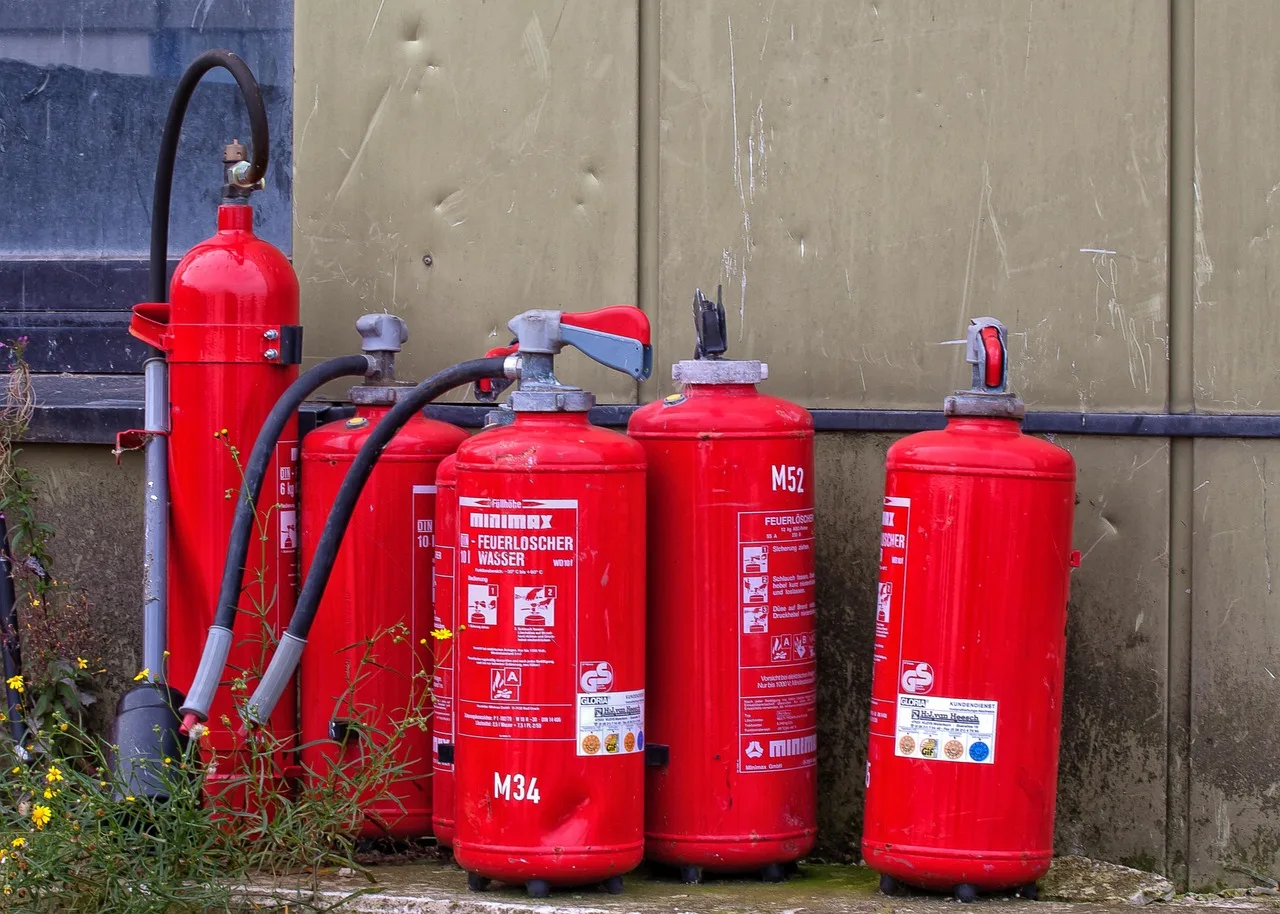
For a family archive that means three cheap decisions. A working smoke alarm in the room where the collection lives. An extinguisher you have actually looked at. And not storing the collection next to the fuel: no boxes on top of a freezer, beside a boiler, or in the room with the fuse board.
Typical US retail ranges are about $15 to $40 for a smoke alarm, $25 to $80 for a small extinguisher, and $100 to $600 for a small fire-rated document safe. A safe without a fire rating does not protect paper.
The hazard survey, scaled down
The Canadian Conservation Institute's note on identifying and reducing hazards argues that preparation could have prevented many disasters or greatly reduced damage.
It adds that a combination of seemingly minor factors left unchecked may become major.
Its survey is five questions, and they work unchanged on a house:
- What is the probability of this risk occurring?
- How often is it likely to occur?
- What type of damage would result?
- How severe might that damage be?
- What degree of risk or loss am I willing to accept?
It also notes that some hazards change frequently, particularly those associated with construction and renovation, and need reassessing as they do. Anyone who has had a bathroom refitted above a study will recognize that.
What a household survey looks like
| Hazard | Likely? | Severity | Fix this month |
|---|---|---|---|
| Upstairs plumbing above the store | Yes | Total for that box | Move the boxes, or add a shelf |
| Blocked gutter on that wall | Yes | Slow damp | Clear it |
| No smoke alarm in that room | Common | Total | Fit one |
| Boxes on the floor | Very likely | High | Raise them |
The point of writing it down is that it converts a vague unease into four jobs, three of which take an afternoon.
Our comparison of storage options covers where papers should sit, and the notes on damage that is hard to undo cover the mistakes that happen without any emergency at all.