
Guides
Starting a family archive: count the collection and fix storage before buying anything
How to begin a family archive: count before you buy, fix the storage location first, keep original order, and do only reversible work in the first pass.
What to take away
- Count the collection into rough groups before buying anything. You cannot size storage for a pile you have not measured.
- Location beats equipment. A closet against an interior wall protects paper better than an expensive box in the attic.
- Keep the order things arrived in. How a relative filed their papers is information, and refiling by subject destroys it.
- The first pass is reversible work onlysleeving, listing, labeling the outside. Repairs and discards can wait.
Start with a count, not a purchase
Family archives usually arrive on someone else's schedule. A house has to be cleared, and eight or twelve cartons come home with whoever had room. The instinct is to order boxes immediately. Resist that for a weekend.
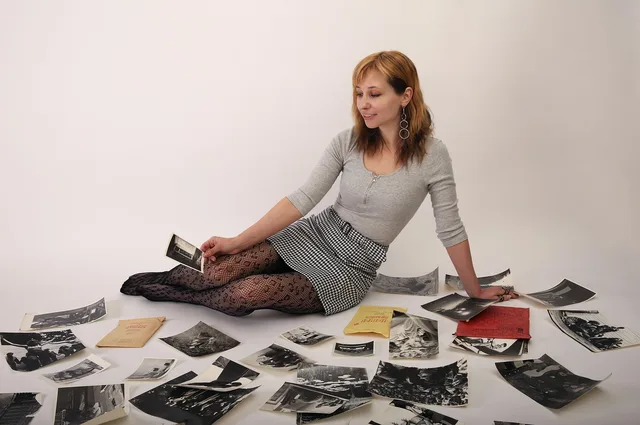
Sorting cartons into piles
- Open every carton
- Sort on a clean floor
- Group prints, albums, negatives, slides
- Add letters and legal records
- Count each pile roughly
Instead, open every carton and sort into broad piles on a clean floor. Group loose prints, albums, negatives, slides, and letters. Add legal and financial records, clippings, tapes and discs, and non-paper items, and count each pile roughly.
Two hundred loose prints and four shoeboxes of negatives are different purchases, and you will not know which you have until the floor is covered.
Fix the location before the containers
Storage conditions do more work than storage products. The New York State Archives, in its guidance on simple steps to preserving family treasures, suggests filtered air, a temperature of 72F or below, and relative humidity between 45 and 55 percent.
Good closet vs bad attic
Interior hall closet
- Temperature
- Stable
- Humidity
- 45-55 percent
- Heat sources
- Away from radiators
- Box type
- Cardboard carton
Unheated attic
- Temperature
- Swings 40F daily
- Humidity
- Uncontrolled
- Heat sources
- Exterior wall
- Box type
- Rated archival box
It suggests a shortcut: if you are comfortable, your treasures probably are too. The Archives says plainly what to avoid: heat sources, exterior walls, basements and attics.
Most homes have one spot that meets this: an interior closet on the ground or first floor, away from plumbing, radiators and the water heater. Find it first.
A rated archival box in an unheated attic is worse than a cardboard carton in the hall closet, because the attic swings forty degrees a day and the closet does not.
Keep the order you were given
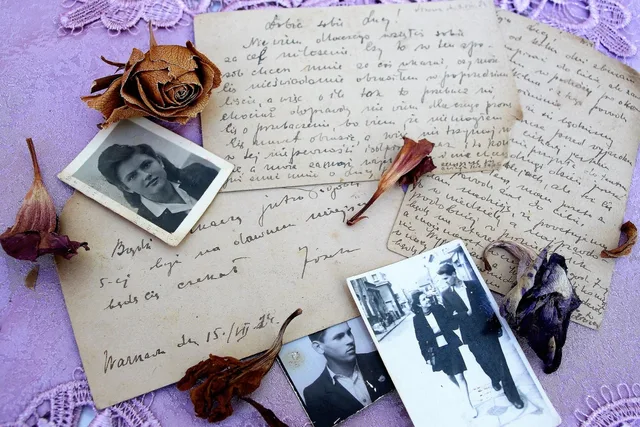
Archivists call it original order, and it is the one thing a household collection can lose permanently in an afternoon. If your grandmother kept every letter from one correspondent in one bundle, that bundle tells you who mattered to her. Sorted into a new chronological file, it says nothing.
Where the order is genuinely random, impose one and note that you did. Where it is not, leave it and describe it.
What the first pass actually is
National Archives conservator Mary Lynn Ritzenthaler, writing on treating memories as documents, sets the standard: do no harm.
Handle paper with two clean hands, open folded letters carefully, never back-fold to flatten, never mend with glue or tape, never trim an original. Stop if your work seems to cause damage.
That divides the work:
Do now vs leave for later
Do now
- Grouping
- Group, count, list
- Prints
- Sleeve loose prints
- Boxes
- Label box exteriors
- Fragile items
- Copy the fragile items
- Location
- Move to the good closet
Leave for later
- Grouping
- Cataloguing item by item
- Prints
- Deciding what to discard
- Boxes
- Writing on any original
- Fragile items
- Flattening, mending, cleaning
- Location
- Buying storage furniture
Anything reversible is safe now. Anything irreversible needs a second look once you know the whole collection, which is what the first pass gives you.
Where the real risk sits
The risks are dull and mostly environmental: damp, heat, light, pests, and one well-meant repair. If the boxes sat in a garage for six years, mold and insects come before sleeves. If they sat in a bedroom cupboard, the real risk is you, working too fast on a Sunday.
Materials matter too, and their labels are less regulated than they look. Our guide to what acid-free and archival actually mean covers the terms on the packaging, and the notes on damage that is hard to undo cover what to avoid in month one.
Common questions
How long does a first pass take?
Should I throw anything away yet?
Do I need gloves?
What if the boxes smell musty?
In this guide
- Conservation basics move into a family archive, but not every one survivesWhat institutional practice teaches a household collection: the conservation basics that transfer from an archive to a house, the ones that need a building.
- A first kit for a family archive, and what it leaves out in 2027The short list of supplies that earns its place on a family archive first pass, in buying order, plus the equipment worth delaying until you know the size.
- Acid-free, buffered, inert: reading the labels on archive suppliesFamily archives materials: what the words on archival packaging mean, where lignin and alum-rosin sizing come from, and when buffered storage is the wrong choice.
- Family Archives Mistakes: Tape, Lamination, and RefilingFamily archives mistakes like tape, lamination, and refiling can cause lasting harm. Learn safer alternatives and how to preserve a relative’s original order.
- Work surfaces for sorting a family archive: the 2027 viewChoosing a table for archive work: size, height, light and the rules about food, drink and pens that make a household surface behave like a reading room.