Industry
Part of Starting a family archive: count the collection and fix storage before buying anything
Conservation basics move into a family archive, but not every one survives
What institutional practice teaches a household collection: the conservation basics that transfer from an archive to a house, the ones that need a building.
What to take away
- Institutions spend most of their preservation effort on conditions, fittings and procedures, not on treating individual items.
- A dry roof and working gutters protect a collection more than any box you can buy.
- Losing the label, the order or the note about who is in the picture is a real loss, with its own name in the field.
- This piece cites published conservation guidance. It carries no interviews, because none were conducted for it.
Why there are no quotes here
The original headline for this page promised what working professionals wish they had known. That would need interviews, and none were done. What follows comes from guidance those institutions publish for their own staff, which is more useful anyway: it says what they actually do, in the words they use internally.
The basics come before the technique
The Canadian Conservation Institute's account of the basic requirements of preventive conservation is the right starting point. It covers the boring layer underneath everything else.
Preventive conservation basics
- Building features checked first
- Portable fittings chosen for object
- Procedures written down
- Roof sheds heaviest rain
- Drainage carries water away
- Design for hundred-year storm
It divides the requirements into three groups: building features, portable fittings and procedures. It also notes that these requirements are so obvious they get overlooked, and that they need to be in place before any more specific advice on collection care is followed.
Its first example is a roof. A reliable roof sheds the heaviest rain and spring meltwater, and reliable drainage and landscaping carry that water away rather than letting it pool nearby; museums are advised to design for at least the hundred-year storm. A roof also blocks the sun's radiation and the pollutants that arrive as dust or in rain.
Read that with a house in mind and the priority list rearranges itself. Gutters before folders.
What transfers to a house
| Institutional habit | Household version |
|---|---|
| Building features checked first | Roof, gutters, damp, plumbing near the store |
| Portable fittings chosen for the object | Shelves off the floor, boxes that fit |
| Accession record for each arrival | A note of which house each box came from |
| Quarantine for incoming material | New boxes stay apart until inspected |
| Scheduled inspection | A recurring reminder twice a year |
The loss that is not physical
The most transferable conservation idea for family collections has an unglamorous name. The Canadian Conservation Institute treats dissociation as one of the agents of deterioration.
It defines dissociation as the natural tendency of ordered systems to fall apart.
It describes the result as loss of objects, loss of object-related data, or loss of the ability to retrieve or associate objects and data.
It notes what makes this agent different from the others. The rest attack the physical state of an object. This one attacks the legal, intellectual and cultural aspects, which is why it gets called the metaphysical agent.
It can appear as a rare catastrophic event, as sporadic severe events every few years or decades, or as a continual process. And it observes something families discover the hard way: loss of value in a few objects can reduce the value of the whole collection, in the way that mixing objects between lots ruins both.
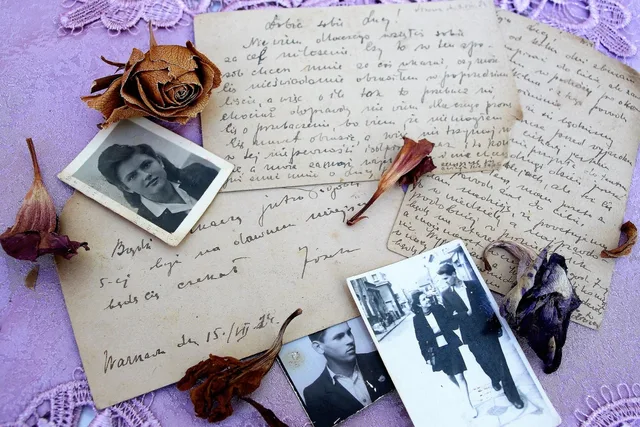
A shoebox of unlabeled photographs is that idea in miniature. Nothing has decayed. The pictures are fine. Nobody knows who anyone is.
What does not transfer
Skip item-level cataloguing. It consumes the time of professional staff and will consume all of yours; box-level and folder-level listing gets most of the benefit. Skip treatment as well. Institutions send damaged items to conservators, and the home version of that impulse is tape.
Our starting point for a family archive sets out the first sort, and the piece on work surfaces covers where to do it.