Reviews
Part of Family archive case studies are rare: what to use instead
Building a family archive emergency kit: before the crisis, not during it
Kit for the emergency you have not had yet: emergencies become disasters when nobody prepared. The short household kit, the one-page plan, and who to call.
What to take away
- An emergency becomes a disaster when it gets out of hand. Preparation is what stops the handover.
- Minor accidents do disproportionate damage to collections because the material is irreplaceable.
- The kit is small and cheap. The plan is one page. Neither works if it is stored with the collection.
- Find out now who to contact locally, because that is the lookup you cannot do at the time.
Why preparation is the whole subject
The Canadian Conservation Institute's introduction to emergency preparedness for cultural institutions makes a distinction worth carrying into a house. Working from dictionary definitions, it observes that all disasters are emergencies, but only those emergencies that get out of hand become disasters, and that if an emergency is managed well it may never turn into one.
It quotes a formulation from a National Park Service planner that is hard to improve on: good planning can prevent an emergency from turning into a disaster, and a disaster from turning into a tragedy.
Its second point applies specifically to family collections.
Any physical emergency affecting a collection will likely endanger it in some way. Collections are vulnerable and irreplaceable, so even minor accidents can be disastrous. It lists the mundane causes alongside the dramatic ones: a burst pipe, a leaking roof or a clogged drain can endanger a collection as much as a hurricane or an earthquake.
That is the argument for a kit. The event you should prepare for is a blocked gutter, not a flood.
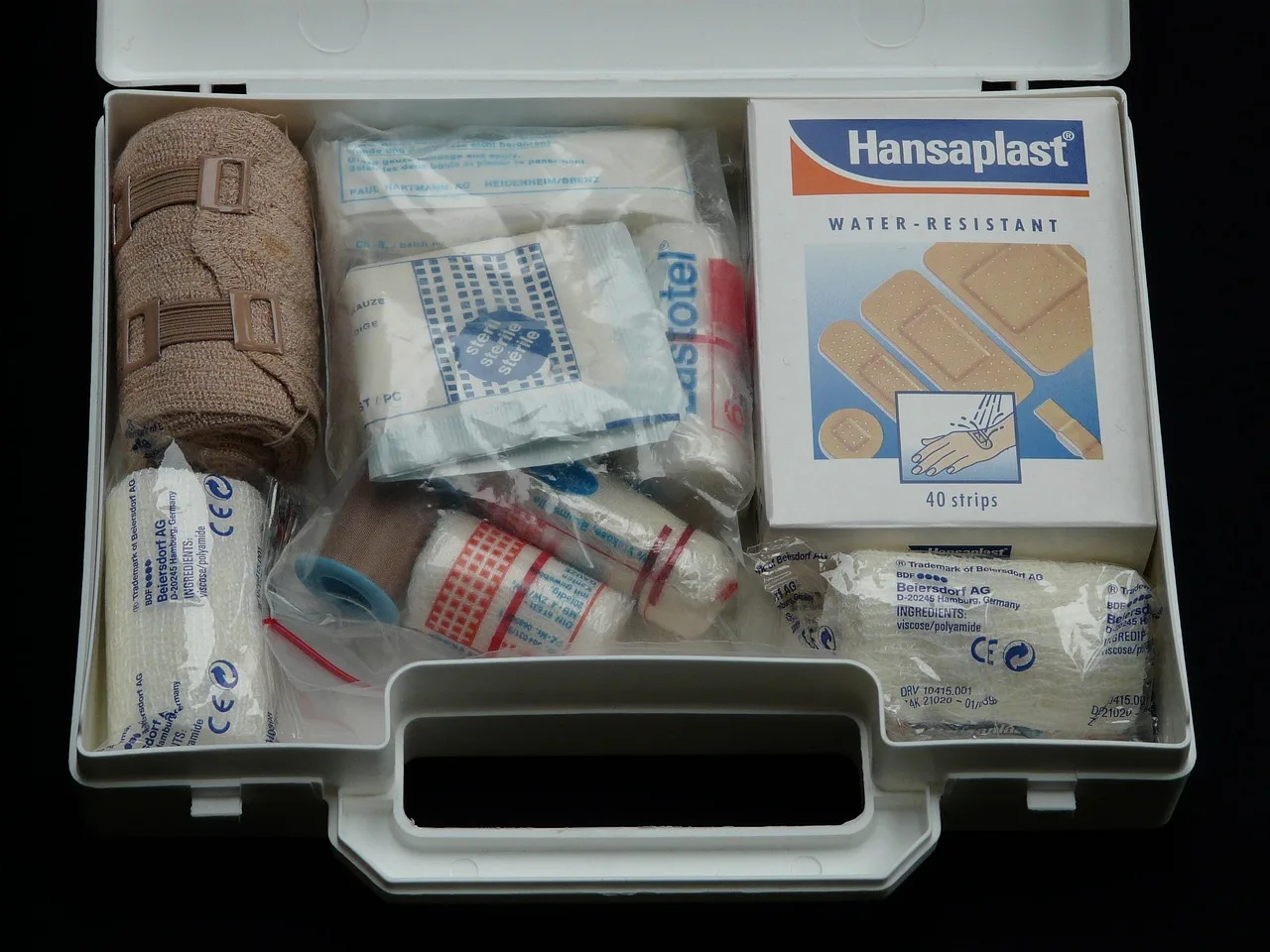
The kit
- Plastic sheeting, enough to cover the storage area, kept outside it.
- Sealable bagsin several sizes, and a roll of larger polythene.
- Absorbent paper, plain, unprinted, and a lot more than seems necessary.
- A torchwith charged batteries, stored somewhere you can reach in the dark.
- Nitrile gloves and a dust maskrated for respirable dust.
- Marker pens and labels, for recording what came from where as you move it.
- A printed one-page plan, not a file on a phone.
Keep the kit near the collection but not in the same cupboard, because the cupboard is what floods.
What the kit is not for
This kit does not treat anything. It buys time and keeps a bad hour from becoming a bad week, and that is the whole of its purpose.
Resist the impulse to add cleaning materials, adhesives or anything you might use to fix something while the adrenaline is up. The first hour after a leak is the worst possible moment to make an irreversible decision, and a kit containing the means to make one invites it.
The plan, and who to call
Indiana's state archives publishes a disaster prevention and resources page that models what a plan should point at. It covers four things: reporting a disaster, preventing one, salvaging water-damaged records, and preservation resources.
It gives contact addresses for reporting a records emergency. It advises contacting professional disaster recovery experts for advice as soon as possible after the situation is discovered.
One detail is worth copying exactly. It offers a list of potential commercial property-damage restoration vendors while stating plainly that the list is not a recommendation. That is the correct posture, and it is what your own plan should record: names and numbers gathered in advance, without pretending you have vetted them.
Your one page should hold: what to save first, where the kit is, who to call locally, your insurer, and the two printed salvage guides you chose earlier. Give a copy to somebody outside the house.
| Line on the plan | Filled in now | Useless if left blank |
|---|---|---|
| First three boxes to move | Yes | Everything becomes equally urgent |
| Where the kit lives | Yes | You search while water spreads |
| Local archive or conservator | Yes | You search under pressure |
| Insurer and policy number | Yes | Claims start late |
Our guide to what documented projects actually show covers reading the evidence, and the notes on the inspection routine cover the checks that prevent most of this.