Reviews
Oral history recording gear for family archives: what to buy first in 2027
Which recorder, microphone, and room setup to buy first for family oral history interviews in 2027, from XLR handhelds to dynamic mics and soft-room treatment.
What to take away
- Start with a handheld recorder that has XLR inputs, such as the Zoom H5, Zoom H6, or Tascam DR-40X, then add microphones.
- For one seated narrator, a dynamic USB mic such as the Shure MV7 or Rode PodMic rejects room noise better than a condenser.
- Fix the room before the gearsoft surfaces, no fans, phones in airplane mode, refrigerator unplugged.
- Record 24-bit WAV at 44.1 kHz, monitor with headphones, and copy the card to a second drive the same day.
- The recorder is step one. The digitizing workflow for oral histories decides whether the file outlives the machine.
Why the hardware decision comes before the interview
Families often interview a parent first and think about equipment afterward. That order loses the only take. A recorder bought after the session cannot capture a voice that has already changed.
Recording hardware, microphone choice, and room treatment are decisions you make weeks ahead. They sit upstream of consent notes, file naming, and transcription. A preservation plan assumes one clean source file already exists.
Choosing a recorder for family interviews
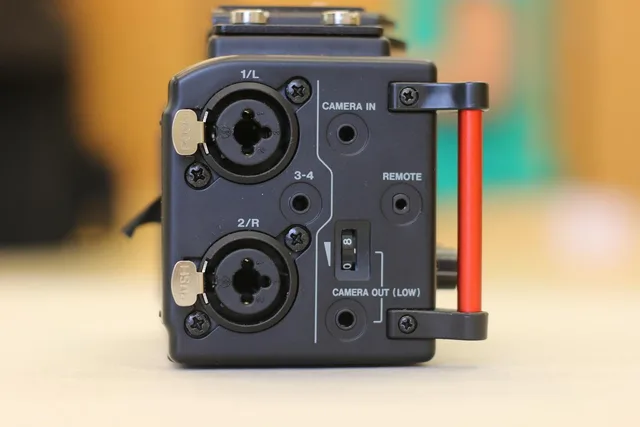
Recorders at this level differ mainly in inputs, not in audio quality. Two XLR inputs let you place a microphone near each speaker instead of one capsule between them.
Choosing a recorder
Inputs
- Zoom H1essential
- Built-in stereo mic
- Zoom H5
- Two XLR, swappable capsule
- Tascam DR-40X
- Two XLR or TRS
- Zoom H6
- Four XLR
- Zoom PodTrak P4
- Four XLR, headphone per person
Best for
- Zoom H1essential
- Short visits, one narrator
- Zoom H5
- Two speakers, external mics
- Tascam DR-40X
- Long sessions, spare batteries
- Zoom H6
- Several narrators, group talks
- Zoom PodTrak P4
- Sit-down talks with two hosts
Buy the smallest recorder that covers your largest expected session. Keep the manual, a spare card, and fresh batteries in the same bag. The practical detail is set out in Starting a family archive count first.
Microphones for one voice or two
Dynamic microphones such as the Shure SM58, Rode PodMic, and Audio-Technica ATR2100x tolerate imperfect rooms. Condenser USB mics like the Blue Yeti or Rode NT-USB Mini pick up fans, traffic, and chair squeaks.
For two narrators, run two dynamic mics on desk stands into a Zoom PodTrak P4 or a Focusrite Scarlett 2i2. A wireless kit like the Rode Wireless GO II suits a narrator who will not sit still.
Room setup at home
Pick the smallest soft room in the house. A closet of coats, a bedroom with a rug, or a parked car with the engine off all beat a bare kitchen with tile.
Turn off the heating or cooling, the ceiling fan, and the refrigerator if you can reach the plug. Put phones in airplane mode and take cordless handsets off the hook.
Set the recorder to 24-bit WAV at 44.1 kHz and aim for peaks near negative 12 dB. Monitor with closed-back headphones so you catch a bad cable before the narrator does.
Place the microphone six to eight inches from the speaker's mouth, angled slightly off axis. Record sixty seconds of test speech and listen back before the real conversation begins.
A first kit checklist
- One recorder with XLR inputs and a 32 GB or larger card
- Spare batteries and a USB power bank
- Two dynamic microphones with desk stands and cables
- Closed-back headphones for monitoring
- A printed consent note attached to a clipboard
- An external drive for the same-day backup
Example: a two-person kitchen table setup
Two-person kitchen table setup
- Clear the table and lay a folded blanket under the microphone stands.
- Place two Shure SM58 microphones on stands, one angled toward each narrator.
- Connect both to a Zoom PodTrak P4, arm the tracks, and set gain near negative 12 dB.
- Record a sixty-second rehearsal, listen back, and write the settings on paper.
- Open the real take with a spoken slate of names, date, place, and interviewer.
Storing the recording after the session
Copy the card to a computer and a second drive before you edit anything. Label cards with the date and interview code, and keep them out of hot cars and sunny windowsills.
Keep paper logs and consent notes with the same collection. The NARA guidance on preserving family archives recommends acid-free folders and boxes for family papers and photographs.
Transfer costs depend on format, running time, and condition. The NPS Conserve O Gram on digitizing audio and video lists the factors that drive those quotes.
If you hire a transfer service, the USA.gov consumer complaint process is where an unresolved dispute with a provider ends up.
Where the gear fits the larger workflow
The recorder, the microphones, and the quiet room produce one file. Naming, transcription, and storage turn that file into an archive someone can find in thirty years.
Paper notes about mics, levels, and room conditions belong with the audio. They tell a future listener why one take sounds thin and another sounds close.