Industry
Family archive case studies are rare: what to use instead
Family archive case studies are rare, so this looks at what published evidence from the NIST disc study, LOCKSS and NDIIPP can and cannot show you.
What to take away
- Family archive case studies are rare, and none was followed for this article; inventing one would be worthless.
- What exists instead is published institutional research and project documentation from libraries and laboratories, and it says less than marketing claims do.
- Media lifetime figures come from accelerated stress testing, not from watching discs for twenty years.
- Read published projects for examples of institutional preservation work.
What institutional evidence can show
Published evidence can clarify how media behave under specified tests and how institutions organize preservation. It cannot establish how long a particular family's archive will last.
Invented case studies would be fabrication, and vague ones would be worse because a case study with no verifiable detail is a marketing device. What this site can offer honestly is published evidence, more useful than any single family's story.
Where the numbers actually come from
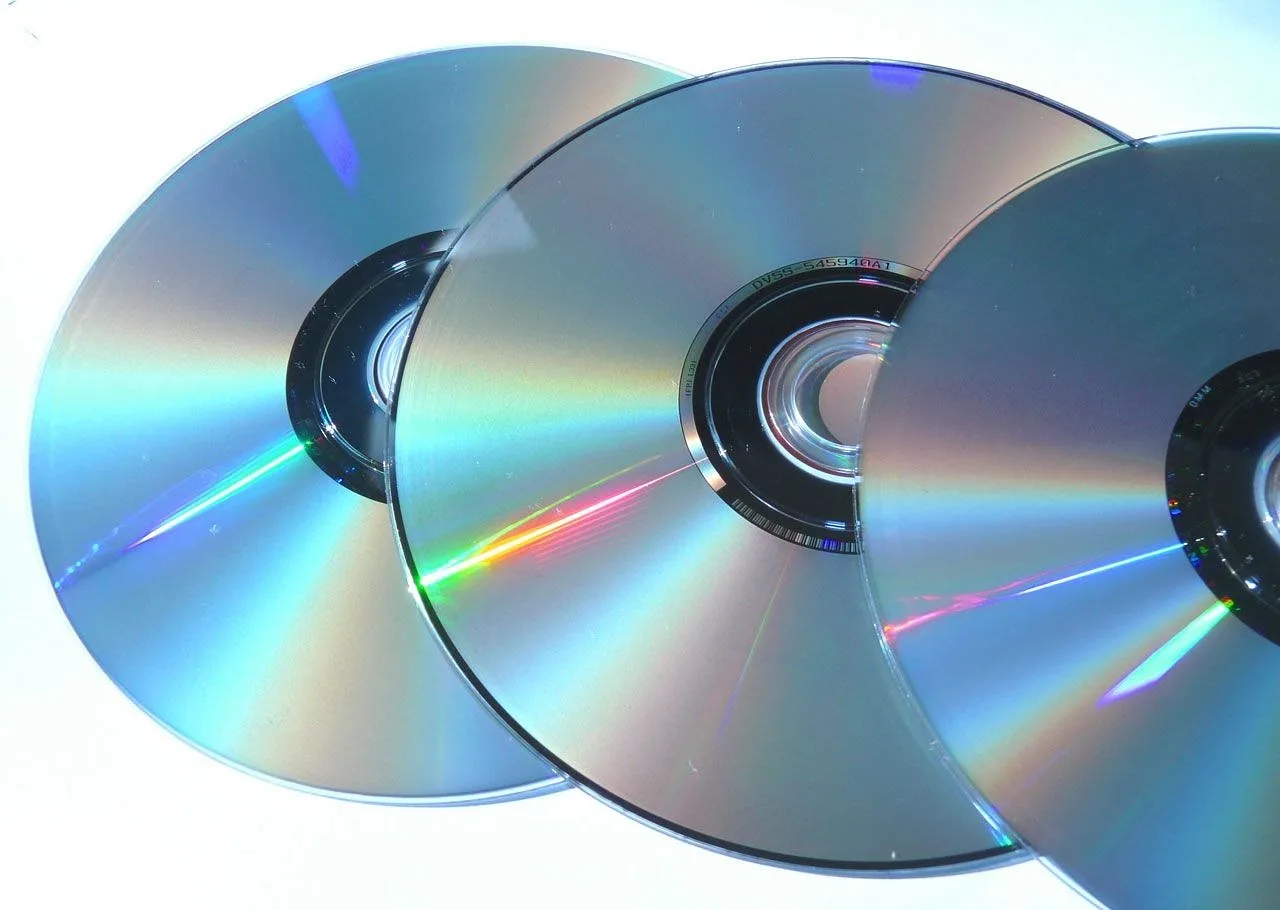
Claims about how long digital media lasts sound like observation. They are not. In 2004, the National Institute of Standards and Technology published "Stability Comparison of Recordable Optical Discs: A Study of Error Rates in Harsh Conditions" in its Journal of Research, by Slattery, Lu, Zheng, Byers and Tang, on the stability of recordable optical discs. It examines error rates in harsh conditions.
From Lab Test to Your Shelf
- Accelerated testing stresses media
- Failures appear in usable timescale
- Lifetime estimates extrapolated back
- Not the same as your disc
- Ask: how would I learn it failed?
- Ask: what would I do next?
The study exposed recordable compact discs and digital versatile discs to 80 degrees Celsius and 85 percent relative humidity. Error rates for the weakest products rose past the failure threshold within a few hundred hours. The strongest discs stayed readable through the run.
Accelerated testing stresses media to produce failures in a usable timescale, then extrapolates lifetime estimates back. It is the only practical method, not the same as knowing what the disc on your shelf will do.
For a household, the question changes. Instead of asking how long a disc lasts, ask how you would learn that one had failed, and what you would do next. That question has an answer you control.
What published projects are good for
Institutional guides collect project write-ups, and they are worth reading for a specific reason. Michigan State University Libraries' page on digital and optical media preservation gathers the reference material. It links quick tips with a bibliography from a national library association and a personal digital archiving guide with basic steps for scanning documents and photographs.
The same page points to a collected volume of posts from a national digital preservation blog, described as a primer for the novice and a refresher for the experienced. It also lists standalone guides to preserving digital files.
That list is guidance written by people who have done the work at scale, published free, aimed partly at individuals. It is the closest thing to a case study literature on this subject, and more transferable than a single household's account.
Two write-ups are worth naming here. LOCKSS, run by Stanford University Libraries since the late 1990s, keeps the same journal content in many libraries. The copies audit and repair each other, so no single library's copy has to be trusted.
The Library of Congress's National Digital Information Infrastructure and Preservation Program, begun in 2000 with roughly $100 million from Congress, funded a network of partners. Its published lesson was that no single institution can preserve digital material alone.
What Each Source Can Tell You
Source type
- Laboratory study
- Material under stress
- Institutional guide
- Recommended procedure
- Project write-up
- What went wrong
- Marketing claim
- Nothing verifiable
Tells you
- Laboratory study
- Your specific item
- Institutional guide
- What people skip
- Project write-up
- If your case matches
- Marketing claim
- Anything
Cannot tell you
- Laboratory study
- Institutional guide
- Project write-up
- Marketing claim
Reading evidence honestly
Three habits. Check the date, because technical figures age faster than process advice. Check whether the conditions described resemble yours. And treat any lifetime figure as a comparison between products rather than a promise about one of them.
Our guide to what digitizing costs after the scanner covers the obligation that follows from all this, and the notes on digitizing mistakes cover the failures the evidence keeps describing.
Common questions
Are manufacturer lifetime claims useless? Not useless, but they describe good conditions and good manufacture. Treat them as a ceiling, not an expectation.
Should I trust accelerated aging results? As comparisons between materials, yes. As predictions for one item in one house, no.
Where do I find project write-ups? University library guides, professional association journals, and conservation institute publications. Most are free.
In this guide
- What the published project accounts agree on as of 2027What the published project accounts agree on: across film, tape and digital preservation guidance, the same four conclusions recur. What they.
- Building a family archive emergency kit: before the crisis, not during itKit for the emergency you have not had yet: emergencies become disasters when nobody prepared. The short household kit, the one-page plan, and who to call.
- Cellulose nitrate in family collections: recognize it before you store itHow to spot cellulose nitrate in old family objects by date, look, smell, and trade names, and how to store it ventilated, cool and labeled.
- Family archive mold: it starts with humidity, not with bad luckMold needs humidity above 65 percent, warmth and still air. What to do in the hour you find it, and the four things people do instead that make it worse.
- Bench setups compared for family archive work, from paper to textilesA mixed family collection needs one bench that changes shape, not three. Here is how each setup is laid out for paper, photographs and textiles.