Guides
How to Preserve a Military Uniform: Padded Hangers and Acid-Free Storage
To preserve military uniform pieces, pad the shoulders, remove metal, and box the wool flat in acid-free storage. Here is the order that works.
What to take away
- Pad the shoulders and support the full weight of the garment before anything else.
- Remove metal insignia, buttons and pins, because they corrode and stain the wool they touch.
- Store acid-free, flat, and dark, with a record of what came from whom.
- Inspect twice a year for moths and damp, not once a decade.
- A shadow box is display, not storage, and the two jobs need different materials.
What you need before starting
Gather everything first, because handling a wool tunic twice is worse than handling it once.
- Unbuffered acid-free tissue paper, several sheets
- A padded or broad wooden hanger, or a flat acid-free box for a folded coat
- Nitrile gloves, cotton gloves for metal
- A soft brush and a low-suction vacuum with a screen
- A pencil and paper for the condition record
Do not buy a garment bag yet. Most clear plastic bags trap moisture and off-gas onto wool, and a $9 acid-free box does the job better for a folded coat. Read Archive materials fail quietly: plastics and rubber damage from the inside before you spend anything on containers.
The sequence
- Photograph the uniform as it arrived, front and back, with any tag or name visible. This record matters more than the cleaning.
- Lay it on a clean, padded surface. A bare table edge can abrade a shoulder seam. The work surfaces compared piece covers what to put under it.
- Remove every metal itembuttons, rank insignia, medals, collar disks, and any pin. Bag them separately with a label.
- Surface-clean with the brush, working with the nap, not against it. Vacuum only through a screen, on the lowest setting.
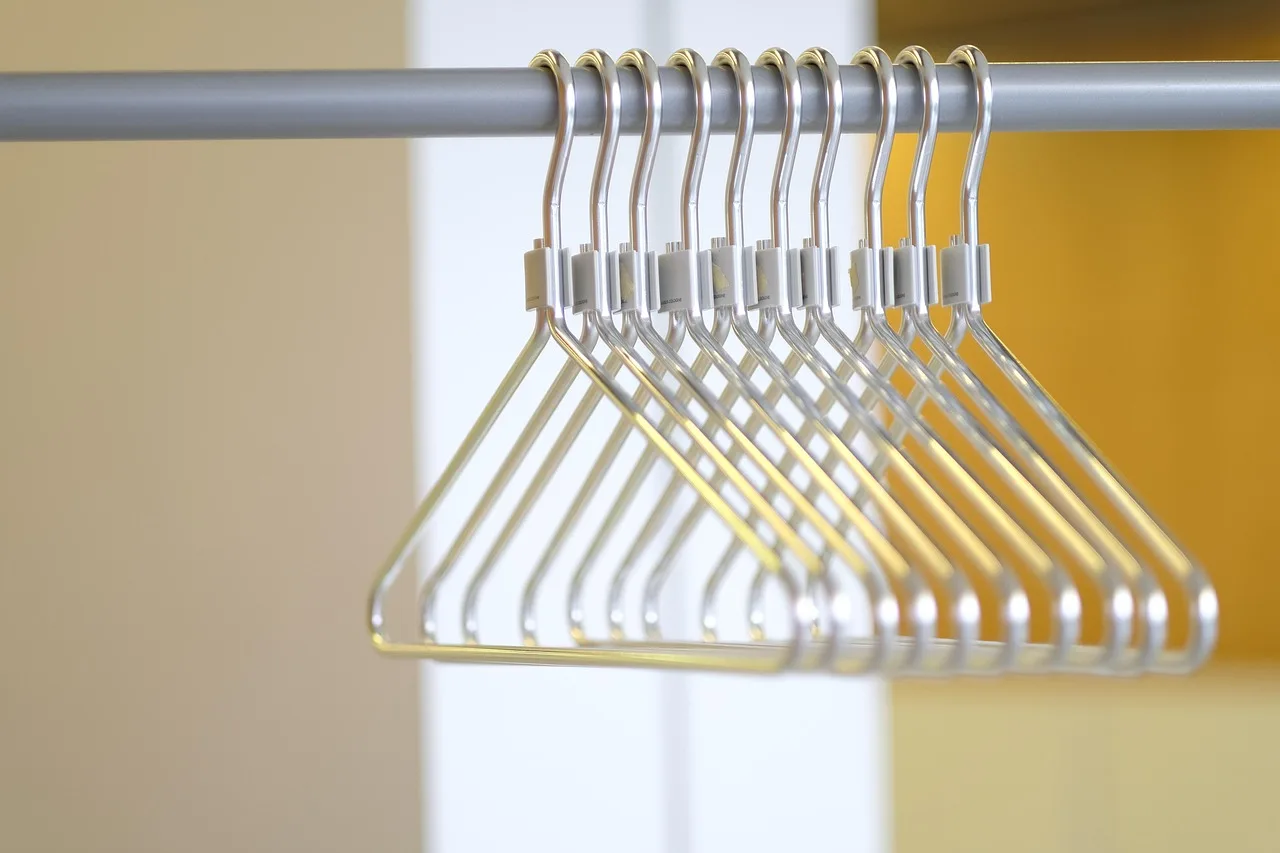
- Pad the shoulders and chest with crumpled acid-free tissue so the fabric holds its shape without a crease line.
- Hang on a broad padded hanger, or fold along existing seams into an acid-free box with tissue between layers.
- Label the outside with the name, branch, and era, then store it dark, cool and dry.
The National Archives guidance on family archives covers textiles and uniforms directly, and it recommends acid-free storage and padded hangers as the baseline. See NARA family archives guidance.
Where judgement replaces the recipe
Two decisions have no fixed answer. First: whether to hang or fold. A heavy wool overcoat hung for years will stretch at the shoulders under its own weight, so fold it, while a lightweight dress jacket with a structured shoulder holds better on a padded hanger.
If the garment already has a crease from decades in a footlocker, do not try to press it out. Let it rest padded and flat, and accept the line.
The second is what to do about damage you find. Loose stitching, a moth hole, a rust ring from a button: write it down and photograph it. Do not attempt repair with household thread or iron-on tape. Those fixes become permanent problems and they lower the value of the piece.
How to tell it is right
Run three checks after storage.
- The garment holds its shape when you lift it, with no shoulder droop or new fold line.
- The tissue has not yellowed or cockled against the fabric.
- No musty smell when you open the box, and no fine grit in the bottom.
A clean, dry wool coat in a closed acid-free box should stay stable for years. If you smell damp or see frass, storage has failed and the garment needs airing somewhere dry before it goes back.
The NPS Conserve O Gram series has a technical note on caring for military uniforms and textiles for the museum standard.
Fixing it when it is not
Moths are the common failure, and they stay hidden for months inside a folded coat. The tell is gritty dust in the creases and small holes along the fold.
If you find them, isolate the garment in a sealed bag, freeze it for two weeks, thaw it, and freeze it again. Then clean the storage area completely and replace every tissue and box.
A second failure is the shadow box. Families often frame a uniform and hang it in sunlight, and the wool fades and weakens within a few seasons. If the piece matters, store it properly and display a photograph instead.
A shadow box for a uniform you also want to keep needs UV-filtering glazing and a mount that does not pin the fabric. If you are building one, A first kit for a family archive, and what it leaves out in 2027 lists what belongs in the box and what does not.
Example
A reader inherited her grandfather's WWII Army Air Forces dress jacket, stored in a cedar chest since 1946. The cedar had left a strong odor in the wool and two buttons had rusted against the lining.
She removed the buttons, bagged them with a label, and aired the jacket in a dry room for four days.
She padded the shoulders with acid-free tissue, folded along the original seams into an acid-free box, and stored it on a shelf away from the furnace. The odor faded over about six weeks. Rust stains stayed; she photographed them as part of the record.